 DKT
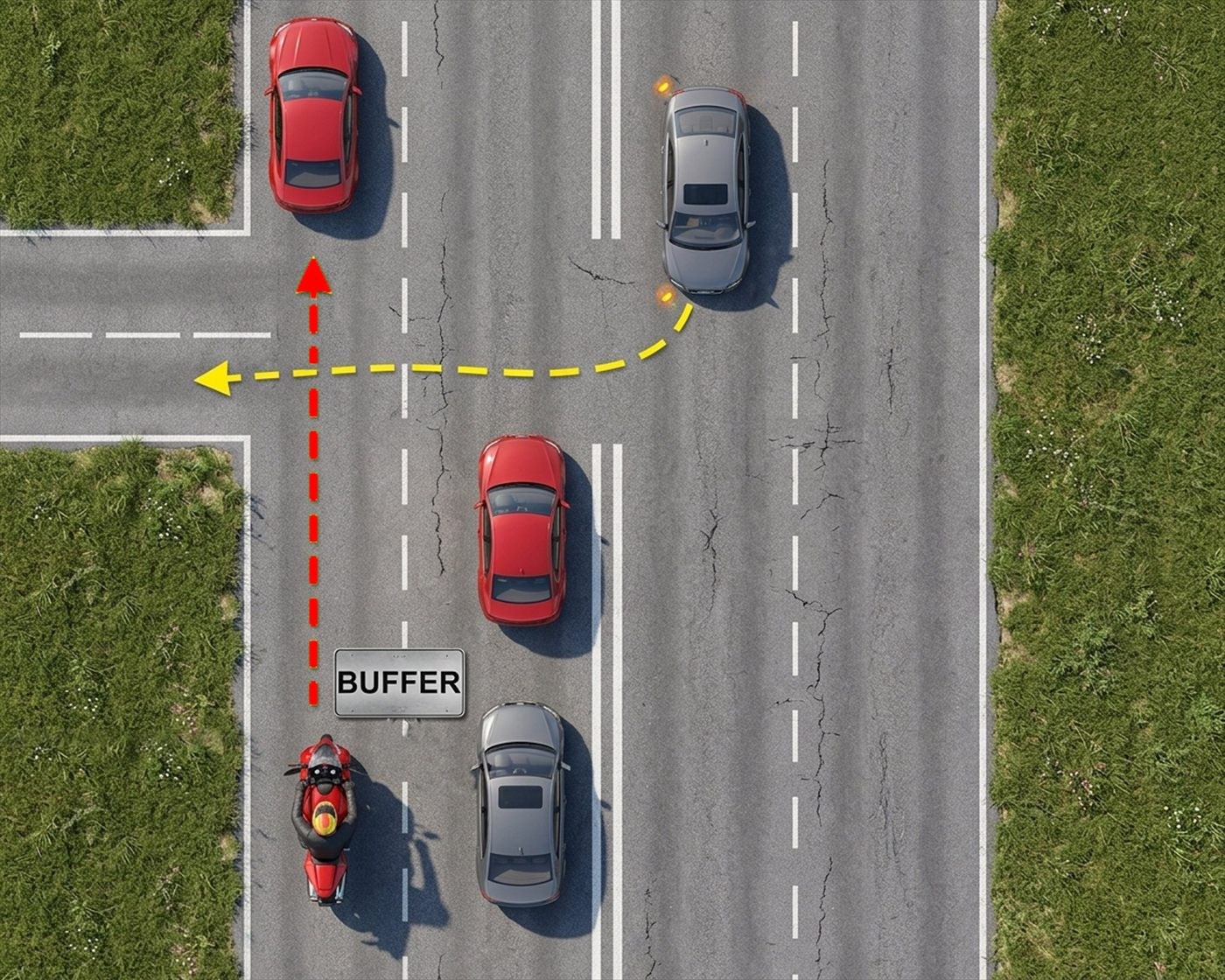
- The handbook says most crashes between a bike and a car happen at intersections.
- Being seen helps, but never assume you have been seen.
- Slow down when cars are about at intersections.
Approaching an intersection
Do not count on other vehicles giving way to you. Approach slowly and carefully, and place yourself where you can see and be seen, with as much room as possible to move. If you spot a car that could turn into your path or pull out in front of you, assume it will and be ready. Position yourself so you are well clear of other traffic.
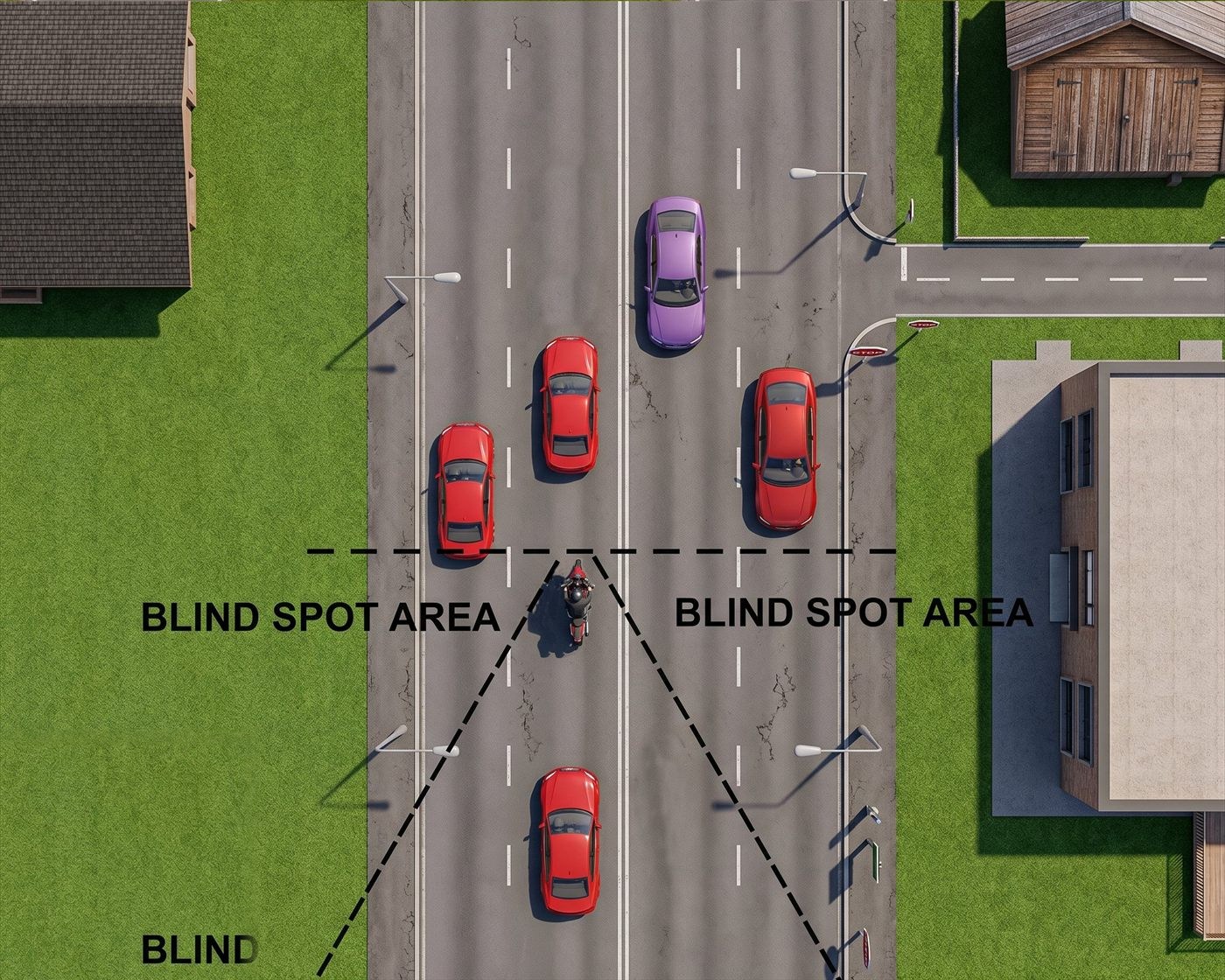
Mind the driver's line of sight
Think about what the other driver can see. A driver may not be able to see you coming at an intersection, so work out where their blind spots are and move to a spot where they can see you. Try to ride where you can see the driver's eyes in the car's mirror.
Claim your lane
- By riding where you can see and be seen, you are claiming the lane and discouraging drivers from trying to share it. Sharing a lane is dangerous.
- Try for eye contact with drivers coming the other way, but do not rely on it. Be ready to stop or take evasive action.
- Take extra care when a driver is pulling out from the kerb, since bikes can be hard to see. The car might even make a U-turn, so be ready to swerve, stop or use your horn.
Be bright, but do not rely on it
- Consider a brightly coloured or reflective helmet and clothing. Yellow, orange and red show up against most backgrounds.
- Reflective tape on your clothing or bike works well at night. The handbook says a reflective vest is more noticeable to drivers behind you than a tail light.
- Learners must wear a hi-vis vest or jacket. See what to wear.
No matter how visible you are, some drivers will not see you or will not follow the rules. Keep watching for them and be ready to look after yourself. For more on using your lights and horn, see headlight, indicators, brake light and horn. Car drivers' rules are covered in give way rules at intersections.
Based on The Victorian Rider Handbook (2023, Department of Transport and Planning) and the VicRoads motorcycle pages. This guide covers Victoria: other states and territories have different rules, and rules change from time to time, so check vicroads.vic.gov.au for the latest.
Quick answers
Where do most motorcycle crashes with cars happen?
The handbook says most crashes between a bike and a car happen at intersections, so slow down and position yourself where drivers can see you.
Is being visible enough to be safe on a motorcycle?
No. Being seen is the beginning of being safer, but some drivers still will not see you, so you must keep watching and be ready to react.