 DKT
- Every rider and passenger must wear an approved helmet that is fitted and fastened securely.
- Learner riders must wear a high visibility vest or jacket.
- Even the best gear will not save you from everything, so ride as carefully as if you had none on.
What the law asks for
- Helmet: it must be certified to AS 1698, AS/NZS 1698 or ECE 22.05 and carry the certification marking. Helmets made or imported from 1 July 2012 must also show the mark of a JAS-ANZ accredited body. Do not remove that sticker.
- Visor or face shield: it must meet AS 1609 or a suitable European standard.
- Hi-vis: learners must wear a securely fastened vest or jacket that is marked as meeting one of AS/NZS 4602.1:2011, ISO 20471:2013, ANSI/ISEA 107-2015 or BS EN471:2003. The handbook ties this to learner permits issued from 1 October 2014. See helmet and clothing law.
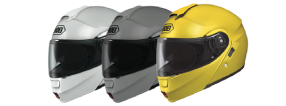
Helmet advice
- Buy it new and make sure it fits snugly. The padding moulds to one person's head, and a used helmet may be damaged where you cannot see.
- A helmet is built to cope with one impact only. Even a drop onto the ground can harm it, and old ones wear out, so check for loose padding, cracks and frayed straps.
- Clean it with mild soap and water. Solvents, paint and stickers can attack the shell.
Eyes and face
Protect your eyes from wind, dust, rain, insects and stones. Goggles or sunglasses must be impact resistant, scratch-free and must not cut off your side vision. Never use tinted eye protection at night, and replace anything scratched.
Jacket, pants, gloves and boots
- Jackets and pants should have padding at the elbows and knees (spine, hips, shoulders and chest as well, if possible), cover your arms and legs fully, and fit snugly at the neck, wrists, waist and ankles.
- Leather probably still gives the best protection against sliding on the road, but good synthetic gear is available too.
- Gloves should be made for riding, from strong leather or good synthetic material, with a snug wrist so they stay on in a fall.
- Boots should cover your ankles, have strong non-slip soles, and have no laces, rings or elastic sides that could catch or let a boot come off.
Weather and colour
Heat, cold and discomfort slow your reflexes, so wear gear that suits the season, such as well-ventilated summer gear. Wet weather gear should be bright because visibility drops in the rain. Yellow, orange and red stand out well, and reflective tape helps at night.
Based on The Victorian Rider Handbook (2023, Department of Transport and Planning) and the VicRoads motorcycle pages. This guide covers Victoria: other states and territories have different rules, and rules change from time to time, so check vicroads.vic.gov.au for the latest.
Quick answers
What standard must a motorcycle helmet meet in Victoria?
It must be certified to AS 1698, AS/NZS 1698 or ECE 22.05 and be securely fitted and fastened. Helmets made or imported from 1 July 2012 also need the JAS-ANZ accredited body mark.
Do learner motorcyclists have to wear hi-vis in Victoria?
Yes. Learners must wear a securely fitted and fastened hi-vis vest or jacket marked with one of the accepted standards.
Can I wear a second-hand motorcycle helmet?
The handbook says to buy new. A helmet is designed for one impact and moulds to one head, and damage to a used one may not be visible.