 DKT
Key points on line markings for the Western Australia learner test. Each answer is checked against the official Western Australia handbook or road rules; use the practice-question links to test yourself.
May you cross this line to overtake?

Answer: No, you must not cross a single continuous line to overtake
A single continuous dividing line may be crossed only for specific reasons, such as entering or leaving the road, not to overtake.
Practice question 189 · official source
May you cross double continuous lines like these to overtake?

Answer: No, you may not cross double continuous lines to overtake
Double continuous lines mean overtaking across them is not allowed, even if the road looks clear.
Practice question 190 · official source
A broken white line runs down the middle of the road. When may you cross it to overtake?
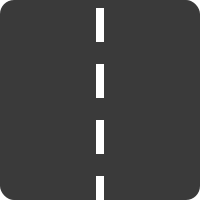
Answer: When you can see the road ahead is clear and it is safe
Where the dividing line is broken, you may cross it to overtake if you have a clear view and it is safe.
Practice question 191 · official source
What is the main purpose of a white edge line?
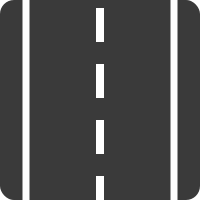
Answer: To show where the road edge is, especially at night or in poor light
Edge lines help you see the road edge and keep your vehicle on the road.
Practice question 192 · official source
What does a single yellow line along the edge of a WA road mean?
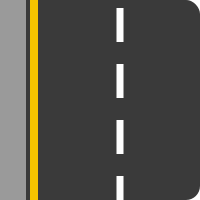
Answer: No stopping, unless you are held up by traffic
A single yellow edge line marks a NO STOPPING area. You must not stop next to or on it unless held up by traffic.
Practice question 214 · official source
Your side of a two-way road has a continuous line beside a broken line on the other side. May you cross them to overtake?
Answer: No, you must stay to the left of both lines
A continuous line on your side means you must not cross it to overtake. Overtaking is only allowed when the broken line is on your side.
Practice question 215 · official source
A person steps onto this marked crossing as you approach. What must you do?

Answer: Slow down and give way, stopping if necessary
A driver must give way to any pedestrian on a pedestrian crossing, slowing down and stopping if needed to avoid a collision.
Practice question 240 · official source
How far before a pedestrian crossing must you not stop or park (unless a sign allows it)?
Answer: 20 metres
You must not stop on a pedestrian crossing, within 20 metres before it, or within 10 metres after it.
Practice question 242 · official source
A continuous yellow line runs along the kerb or edge of the road. What does it mean?
Answer: You must not stop there
A continuous yellow edge line means no stopping.