 DKT
Key points on more safe driving for the Tasmania learner test. Each answer is checked against the official Tasmania handbook or road rules; use the practice-question links to test yourself.
You are in the car approaching the intersection shown. How should you approach it?

Answer: At a speed that allows you to stop if you have to
Approach every intersection at a speed that allows you to stop and give way to vehicles in or approaching it. Many crashes happen at intersections.
Practice question 393 · official source
You wait at a crossing with no gates or lights for one train to pass. What should you do before crossing?
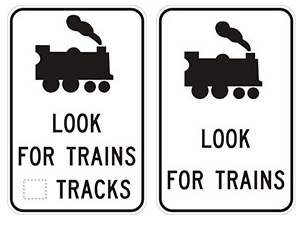
Answer: Check again in both directions for another train
Another train may be approaching on a second track or from the other direction. Always look and listen again before crossing.
Practice question 394 · official source
A railway level crossing has no gates, boom gates or flashing lights. What should you do as you approach it?
Answer: Slow down and look and listen for trains both ways
Take extra care where there are no gates or lights, especially in the country. Never drive onto a crossing if a train is approaching or the far side is blocked.
Practice question 395 · official source
It is sunset on a dull day and visibility is poor. What should you do with your lights?
Answer: Turn on your headlights (low beam)
Headlights must be on at night and when visibility is poor. Hazard lights are not for normal driving.
Practice question 396 · official source
What can happen if you take medicine and also drink alcohol?
Answer: The effects are unpredictable and driving is more dangerous
Mixing alcohol with drugs, including prescription and over-the-counter medicines, has unpredictable effects.
Practice question 397 · official source
You are prescribed a new medicine. What should you do before driving?
Answer: Check the label and ask your doctor or pharmacist
Medicines can cause drowsiness and slower reactions. Check the label and get advice from your doctor or pharmacist.
Practice question 398 · official source
Your medicine label warns that it may affect your ability to drive. What should you do?
Answer: Follow the warning and do not drive until you know it is safe
Medicines can cause drowsiness, blurred vision and slower reactions. If the label says not to drive, do not drive.
Practice question 399 · official source
Can over-the-counter cold and flu medicines affect your driving?
Answer: Yes, some cause drowsiness and slower reactions
Any medicine, including over-the-counter ones, can impair driving. Read the label or ask a pharmacist.
Practice question 400 · official source
At night, oncoming headlights dazzle you. What should you do?
Answer: Look to the left side of the road and slow down
Avoid looking at the headlights. Look to the left side of the road and slow down or stop out of the traffic until your vision recovers.
Practice question 413 · official source
At night, how should you adjust the gap to the vehicle in front?
Answer: Make it longer than you would in daylight
Visibility is poorer at night, so leave a larger gap to the vehicle in front.