 DKT
Key points on more road rules for the South Australia learner test. Each answer is checked against the official South Australia handbook or road rules; use the practice-question links to test yourself.
A sign says "Left turn on red after stopping". The light is red and you want to turn left. What must you do?
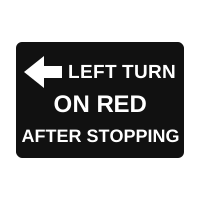
Answer: Stop first, then turn left only when safe, giving way to others
At this sign you may turn left on red, but only after stopping at the line. You must give way to vehicles and pedestrians as set out in the road rules.
Practice question 49 · official source
When may an SA driver turn left while the traffic light is red?
Answer: Only where a sign permits it, after stopping and giving way
Left turn on red is allowed only where a Left Turn on Red Permitted After Stopping sign is displayed, and you must stop and give way to all vehicles and pedestrians.
Practice question 50 · official source
You are behind a long vehicle with a DO NOT OVERTAKE TURNING VEHICLE sign. It indicates left to turn left. What must you do?
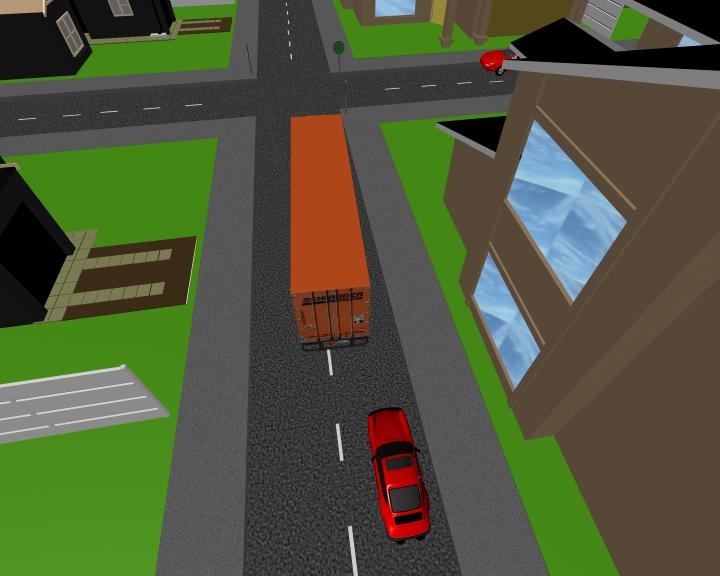
Answer: Stay behind it and let it complete the turn
You must not overtake on the left of a long vehicle displaying the sign while it is turning left. Wait until it has completed the turn.
Practice question 60 · official source
On a road with marked lanes, how should you position your vehicle?
Answer: Completely within one lane
You must keep your vehicle completely inside a single marked lane unless a rule lets you move or cross.
Practice question 61 · official source
You are moving off from the side of the road into a marked lane. Who must you give way to?
Answer: Any vehicle travelling in that lane
A driver entering a marked lane or line of traffic from the side of the road must give way to any vehicle travelling in it.
Practice question 67 · official source
You reach a narrow bridge with a give way sign on your side. An oncoming vehicle is on the bridge. What must you do?
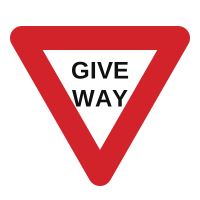
Answer: Give way, slowing down and stopping if needed
A driver approaching a bridge or narrow road with a give way sign must give way to oncoming vehicles on or approaching the bridge when they reach the sign.
Practice question 73 · official source
In which of these places must you not stop your vehicle?
Answer: On a railway level crossing, or just before the rails
You must not stop on a level crossing, or within 20 metres before or after the nearest rail.
Practice question 74 · official source
You must not stop within how many metres before a level crossing or a bus stop sign?
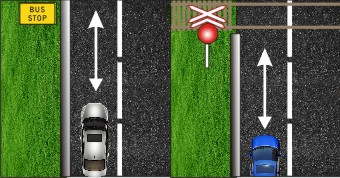
Answer: 20 metres
You may not stop within 20 metres before a level crossing, or within 20 metres before a bus stop sign (and 10 metres after it).
Practice question 75 · official source
You are on a one-way street and want to turn right. Where should you position your vehicle?
Answer: As near as practicable to the far right side of the road
On a one-way road a driver turning right must approach and enter the intersection from as near as practicable to the far right side of the road.
Practice question 76 · official source
When you parallel park away from marked bays, how close may you park to the vehicle in front or behind?
Answer: No closer than 1 metre
In unmarked parallel parking you must leave at least 1 metre from the closest point of the vehicles in front of and behind you.